AI-Powered Quality Assurance for Energy Software: Testing Strategies That Scale
How AI is transforming testing and QA for mission-critical energy trading and operations software.
 Roy Castillo
October 2025
6 min read
Roy Castillo
October 2025
6 min read
Energy software systems — ETRM platforms, SCADA interfaces, measurement systems — are mission-critical and highly complex. Traditional testing approaches can't keep pace with the rate of change or the combinatorial complexity of energy operations. AI-powered testing offers a path to comprehensive, efficient quality assurance.
The Testing Challenge in Energy Software
Energy software testing faces unique challenges: complex business logic (pricing formulas, allocation algorithms, settlement calculations), high integration density (dozens of connected systems), regulatory requirements (auditability, accuracy, completeness), and the operational reality that bugs can cost millions in trading losses or settlement errors.
Traditional manual testing covers a small fraction of possible scenarios. Automated regression tests help but require significant maintenance effort and rarely cover edge cases. The result is a persistent quality gap that manifests as production incidents.
AI-Powered Test Generation
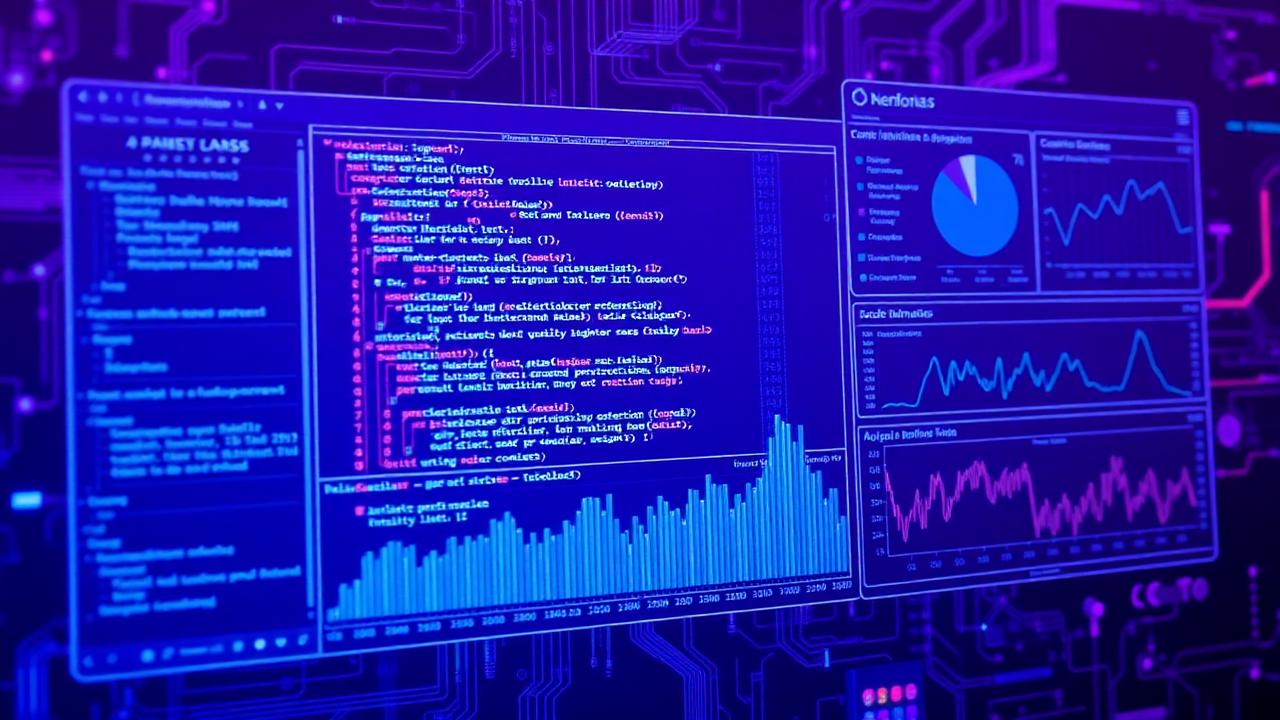
AI can generate test cases by analyzing production data patterns, business rules, and system interfaces. Instead of human testers manually designing scenarios, ML models create comprehensive test suites that cover normal operations, edge cases, and adversarial inputs.
For ETRM testing, this means automatically generating test trades that exercise complex pricing paths, multi-leg deal structures, unusual counterparty configurations, and calendar-boundary scenarios that human testers might miss.
"AI-generated test suites achieve 3x more code coverage than manually designed tests while requiring 60% less maintenance effort."
Visual Regression Testing for Trading Dashboards
Energy trading dashboards display critical real-time information: positions, P&L, exposure limits, and market data. Visual regression testing uses computer vision to detect unintended changes in dashboard layout, data display, and visualization accuracy.
This is particularly valuable for energy operations where a misplaced decimal, a wrong unit conversion, or a data field rendered in the wrong context can lead to incorrect trading decisions.
Continuous Quality Intelligence
Beyond individual tests, AI provides continuous quality intelligence: production monitoring that detects anomalous behavior, automated incident correlation that links defects to root causes, and predictive analytics that identifies areas of the codebase most likely to contain defects.
This shifts QA from a reactive gate-keeping function to a proactive quality improvement capability — catching issues before they reach production and systematically improving software quality over time.
Ready to implement these strategies?
Our team can help you assess your current capabilities and build a roadmap tailored to your operations.
Request a ConsultationRelated Articles
AI Anomaly Detection in Energy Trading: Catching Costly Errors Before Settlement
Natural Gas Scheduling Automation: How AI Reduces Manual Nominations by 80%